Watch Matts Johansen, CEO of Aker BioMarine, talk about company responsibility and how we must look to the ocean to solve some of the worlds biggest challenges.
Thank you Anette for using us as an example
and to everyone who dedicated a whole day to this event.
Folks, we are in trouble.
In 2050, we'll most likely be 10 billion people on the earth
It took thousands of years to reach 5 billion,
then only 60 years to reach an additional 5 billion.
We will be required to produce almost 70% more food in 2050, than what we do today.
Mainly driven by the population growth, but also because we are triggering other problems.
Such as increasing prosperity.
This food production adds on to the resource situation that is already stretched.
So today, we use 60% more resources than the earth can manage to reproduce.
In 2030, we will consume 100% more than the earth can reproduce.
There's something called Earth Overshoot day.
This is the day during a year, that we stop consuming renewable resources,
and we start "withdrawing from the bank".
This year, this was august 5th.
In the first years of the 21th century, this day was in the end of October.
So this is changing fast, and towards the wrong direction.
Presumably, we feel that we get healthier for every day here in Norway.
We're drinking smoothie, and we eat sushi, and attend Birken and what else.
The reality is that we're not getting healthier.
Besides maybe a few.
In average, we're getting more unhealthy.
World wide the trend is even more serious.
This is because of our life choices.
The choices we make in our lives, works as an enormous burden
not only on us, but also for the society in general.
In between now and 2030, we will spend 22 trillion USD in health care
to handle lifestyle diseases that is a result of our lifestyle choices.
That's two Norwegian ||oil funds spent.
So we are in trouble, and we got to act now.
But, there's hope.
We in Norway, especially, can be a part of that solution.
Our earth consists of 70% ocean,
and in Norway we have a culture for utilization of the ocean in a good way.
There's only two percent of the calories we eat today, that comes from the ocean.
Less than a half percent of the pharmaceuticals that is on the market today,
comes from the ocean.
So when we face our challenges, we will be required to utilize the ocean
to find the solutions.
And that is what Aker BioMarine does.
We start with the ocean to develop products that can help solve these challenges,
in a sustainable way.
A renewable way, where we don't leave any negative footprint.
So what we do, is to fish this little rascal that you can see on the screen.
This is a krill.
Actually, we are the first company that has commercialized this fishery on a new species.
In fact, it's one of the biggest biomasses in the world.
The krill's biomass is 2x the human biomass.
It's an unutilized resource.
Additionally, it's far down in the food chain so it's an efficient way
to withdraw energy from the ocean.
Think about it philosophically. Okay now, here we got a huge biomass.
It's in every ocean, and its on the lowest level in the food chain,
and we know that important molecules and nutrients accumulates upwards in the food chain.
Which means that, throughout millions of years of evolution,
then presumably krill and it's components has become important for life.
This is the fundamentals of Aker BioMarine.
It's to refine the molecules and components, and it's to research the effects they have
and then attempt to commercialize it.
One of the components that we have refined is an ingredients that is used in the aquaculture worldwide.
It's used to streamline aquaculture, through boosting the growth with the same infrastrucure
it secures a healthier fish and shrimp, and boosts the quality of the product that
leaves the aquamarine facilities.
This is utilized worldwide and on a lot of different species.
Looking at salmon, that is a fish we have a close relationship to here in Norway.
By using a small amount of our ingredient in the salmon's food,
this salmon would grow 23% faster than without our ingredient.
This is because it gets healthier and it affects the salmon's appetite.
Which again means that it eats more and grow faster.
This means that you can produce more salmon with the same infrastructure.
In 2015 only, our ingredient contributed to 150 millions extra portions of salmon.
So without us, there would be 150 million less salmon meals available in the market
and we would be a step further behind solving the food problem, than we are today.
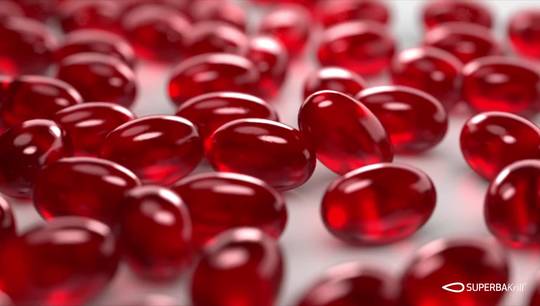
Another component we utilize is a special kind of Omega-3.
A phospholipid Omega-3.
It's a different type of Omega-3 than the one we find in fish and fish oil.
In every cell membrane in every cell in our body, there's a layer of phospholipid.
When our Omega-3 arrives in a phospholipid form, then it would get more efficiently delivered
into the cell, where it has an effect.
This is what we have withdrawn from the krill as a component, and then researched.
Today, there's a total of 1 billion daily doses being sold,
and it's well documented that phospholipid Omega-3 products and also other Omega-3 products
contributes to reducing the risks associated with lifestyle related diseases.
So our products contributes directly in solving some of the complications
in lifestyle related diseases.
Actually. Earlier this year a research was published, that says that for each USD a consumer spends
on phospholipid Omega-3, or another type of Omega-3,
the cost of health care is reduced by 2.3 USD.
So we are participating in solving problems by developing a product.
There are lots of serious diseases out there, and only a half percent of the pharmaceuticals
comes from the ocean.
Presumably, the solutions to some of the medical riddles lay within the ocean.
This in particular, is something Aker BioMarine has started working on.
There are lots of serious diseases out there that doesn't get the attention required,
Because there's no money to be earned for the big pharma companies.
According to Doctors Without Borders, there's no development on a treatment for Ebola.
A disease named Lupus, an autoimmune disease.
It's a very severe disease, that makes your immune system attacks the healthy body.
There hasn't been any new products for this disease the last 50 years.
For this particular disease, we have discovered a molecule from krill that potentially
will allow us to help people affected by this disease.
Approximately 1 million people, mainly people with African of South American background
are affected by this disease.
This means that the big Pharmas prioritize different segments, unlike us.
We have started the development, that hopefully will be finished in 2-3 years.
So, we participate in resolving some of the major issues associated with food and health.
At the same time we take fish out of the oceans, and we have to make sure we do this
in a sustainable way.
We had the rare opportunity of building a fishery from bottom up.
The thing Aker BioMarine did before fishing a single krill, was to engage the environmental organizations.
Specifically WWF here in Norway.
We said: "We want to build this fishery in an environmental way from day one.
Help us by guiding us on how we can do this".
That was the beginning of a 13 year old partnership with WWF,
and we have followed their guidance all the way.
Their first advice was that there's a lot of krill, but there's also other vulnerable species in Antarctica.
Make sure you have no bycatch of any sort.
That's why we develop our Eco Harvesting technology, which eliminates bycatch.
We have less than 10 kg bycatch a year, and we catch a total of 200 million kg.
Their next advice was to become MSC certified.
It is the highest ranked certification for fishing and environment,
and it's the only certification that is recognized by organizations, scientists and big Corporations.
It was a demanding development, but we were MSC certificated in 2010, and still are.
WWF's third advice was. "Ok, Aker BioMarine does everything right,
and if you accomplish success, then other companies will follow.
It's not said that their intentions are equal to you're intentions of doing everything right.
You have to take responsibility and make sure the other companies respects the environment as well.
So we acted on this advice by establishing something called ARK.
Association for Krill Harvesing Companies.
ARK organizes the majority of krill harvesting companies.
Through this organization, we have established self-created environmental initiatives that exceeds
what the regulations requires.
For example, every vessel should have a dedicated observer that is going to report catch and operations.
All the vessels, is going to offer their vessels for one week a year to science purposes.
This is so scientists can give us more knowledge about the ecosystem in Antarctica.
A very good example, is when the 24 nations with ownership in the Antarctica
gathered to agree on the regulations of next years fishing.
During this gathering, some scientists expressed their concern about penguin colonies close by the fishing.
The diplomatic representatives didn't agree to delineate the fishery from these areas.
At this point ARK came forward and said; we will not fish in this area anyways.
Because the scientist tells us not to.
Aker BioMarine does most things the right way, but even though you do everything right there will be criticism.
Our approach to criticism is to always reach out and create a dialogue.
Maybe they have some good points, and maybe they have good advices to us on how
we can do things even better.
A result of this type of dialogue, is the establishment of AWR.
AWR is a science foundation we established last year.
The reason was that we met environmental organizations in the US that was skeptical
about fishing industry in Antarctica.
They said: "Yes, we know you do everything right, but we do not have enough data. We can't confirm
with 100% certainty that the environmental impact is as minor as assumed.
So we established this foundation as an independent foundation, where Aker BioMarine, our customers
and our partners donates money into the foundation.
At this point we have donated 7 million NOK.
Our money is distributed as research grants by the environmental organizations and the scientists.
As a result from this, our fishery was graded "grade A" by something called
Sustainable Fishery Partnership.
This is an independent organization that grade the sustainability of different fisheries.
"Grade A" means in very good condition.
We are actually the only fishery in the world, that has a "grade A".
So Aker BioMarine really is one of the most sustainable fishery in the world.
We have 271 employees.
We are almost 10 years old.
This year we will exceed 105 million USD in revenue.
We have had an average growth of almost 30% since startup.
We will be generating around 26 million USD in EBITDA this year.
This proves that its profitable from a business point of view, to solve the big issues in the world.
We believe that there is a trend among today's youth, that these issues is higher up on their personal agendas.
We belive that it will become extremely profitable to solve the big issues in the world.
We also believe that it will become impossible to run a business that has a negative affect on these issues.
That is why we were very happy when UN presented their sustainability goals 1 year ago.
These goals puts the work with sustainability in a bigger context.
Especially here in Norway, we associate environment with sustainability, because this is what affects us.
The UN associates sustainability with much more than the environment.
UN includes problems such as food consumption and hunger as a part of their goals.
So basically, they gave us a framework for our business to take a new approach and work comprehensive
with our own sustainability goals.
When UN presented their sustainability goals we immediately decided to be one of the
first companies to implement these goals into the core of our sustainability strategy.
It's not just a little department excluded from our business, but a part of our business's core.
Without ignoring the others, we have chosen 4 of UN's goals to focus on
because this is were we can make a change.
We approach goal number two by streamlining the aquaculture process and get a higher production.
Number three we target by produsing the phospholipids as well as working wih Lupus.
Number 14 is a natural part of our fishery in Antarctica.
And we work with number 12 by logging our CO2 emissions and continually working towards lower emissions.
To wrap up, I will show you a video from our latest science project.
There's no doubt that mental health is a big challenge that is somewhat hard to understand.
Much of it comes from the pressure we have.
There's a huge pressure in businesses today.
You always have to change and adapt.
There's pressure from the surroundings that tells you how you should live your life,
and this affects peoples mental health.
So we want to look at the possibilities of products that can contribute to a better mental health.
Because this pressure won't go away.
There's no better model to test this, that to team up with the military and the elite soldiers.
The elite soldiers lives under enormous amounts of pressure.
And we know that sadly more soldiers die from suicide than from war.
So we have established a research partnership with the US military.
More specifically the Rangers Soldiers, which is the elite soldiers to the infantry
in the US military.
And we will be observing 460 of these elite soldiers over a 2-3 year period.
Half will get the molecule for krill, and the other half will get a placebo.
Then we will measure their mental performance through this period.
Here's a short video that we will play for you, to show a bit about what this means.
With that, I thank you all for listening.
Thank you!